Showing posts with label D&D. Show all posts

Monday, 10 January 2022

How Many Words do They Have for the Dark?

https://cosmosmagazine.com/archaeology/neanderthals-live-us/ - The relationship between H. neanderthalensis and H. sapiens is much closer than a lot of people think.

 
Dwarves live underground. Yeah that's cool, but why?
Dwarves are shorter and more beardy than humans. Yeah sure, but why?
Dwarven craftspeople are renowned for their meticulous work. Yeah, but why?!
Dwarves are resistant to poison. Yeah cool but please tell me WHYYYY!!

The people of the dark, our mysterious and taciturn cousins, the Khuzd, as Tolkien termed them. Dwarves, as deemed by the common tongue, come from a world unlike our own. A world of cold and darkness, of shifting shadows and inhospitable crags. In this post I'm going to talk about various anthropological ideas and how we could use them to think about the different races of D&D- in this case, Dwarves. The theories and ideas I'll be touching upon come from human evolution and our close relatives the Neanderthals, the Kula from Malinowski's Argonauts of the Western Pacific, The Gift by Marcel Mauss, and the Sapir-Whorf hypothesis of linguistic and cognitive interrelation.

The Biological

I was first interested in expounding on the history of the Dwarves after reading about how similar they could be to our cousins in the real world- the Neanderthals. With a background in human evolution, it makes perfect sense to me. Neanderthals evolved in the relative cold and dark of ice-age Europe after a migration of an earlier species of Homo found themselves isolated from African and Asian populations by glaciation and a cooler climate. The Europe of half-a-million years ago was, relative to the vast open plains of Africa and the dense hot jungles of Asia, a gloomy and frigid place. Let's move further into the realm of D&D to have a look at the rules which apply to the race, and what this might say about their evolutionary heritage.
 
Dwarves get a constitution bonus of +2. This implies they are tough and robust. From the fossil evidence, we know that the average Neanderthal's body plan is stout and broad, with shorter limbs than their more gracile cousins- perfectly suited to a cold environment. Creatures which are adapted to the cold are often shorter and stockier, with a greater mass to surface area ratio than their warm climate relatives (see Bergmann's and Allen's rules). Not only this, but their Dwarven Resilience rule suggests that they are adapted to an environment of dietary scarcity or scavenging behaviour akin to vultures. It might also suggest that they had to resort to eating poisonous plants or fungi as a fallback food. Fallback foods are what a species relies upon when their preferred diet is unavailable, generally thought as a more effective driver of digestive and masticatory (chewing) anatomy than a species's preferred food source- if you can't survive in times of scarcity, you won't make it to when the good food comes back.
 
The article I referenced above also talks about some of the Neanderthals' other anatomical features, such as a wider nasal cavity (for greater heat retention and warming of the cold air being inhaled through the nose) and larger eye sockets (for better vision in Europe's darker climate). If you haven't read it yet, you should give it a look, it's pretty cool. 
 
Their darkvision ability is a little harder to rationalise, being a somewhat supernatural ability which lets a creature see in total darkness rather than just low-light conditions, but what it suggests to me is that perhaps Dwarves (and other races which can see in the dark- goblins, elves, etc.) possess something like a Tapetum Lucidum- a layer of reflective tissue at the back of the eye which allows the retinal cells to collect more light and thus see more clearly in darkened conditions. It's responsible for that 'eyeshine' effect so often seen when you shine a torch at a cat in the dark, or take its photo. Although absent in primates (that's why nocturnal species like tarsiers have such massive 
eyes instead), given that this anatomical feature is a common mammalian adaptation, there's no reason it couldn't make an appearance in a fantasy setting. Also the idea of Dwarves' eyes catching the light from glowing embers at the edge of the party's campsite is pretty cool. In any case, this adaptation often suggests a nocturnal activity pattern, but for our purposes, it could just as readily suggest a semi-subterranean one.

From the evidence, we might see a pattern emerging which suggests an evolutionary environment of extremely harsh winters- arctic even- combined with the existence of safe havens in the form of massive, sprawling caves and caverns complete with poisonous fungi. Perhaps to cope with the biting cold of winter, this species used underground habitats as shelter. To adapt to the scarcity of this environment, acquisition of poison resistance and a tapetum lucidum allowed them to survive until temperatures above ground increased, even if only marginally. Populations would probably return to the same underground havens year after year, using them as places to live, to raise young, and bury their dead.

We can also see from numerous sources of evidence that Neanderthals weren't the thoughtless primitives that we used to imagine- the mythical 'cave man.' They could engage in complex symbolic thought, created art, and were probably able to use linguistic expression in the same way as humans. In fact we are so similar that there are a number of anthropologists who even consider them the same species as H. sapiens, owing to the evidence that neanderthal DNA is found in human populations to this day. Allegedly, this interbreeding between populations is where we get the gene for red hair, straight hair, increased body hair, red cheeks, and even freckles. Much literature on the topic is still emerging and it's an exciting time for paleoanthropologists and geneticists alike.


The ... Social?

I'm inserting this subtitle because it's a moiety I feel comfortable with, but in reality it isn't as simple as that. There's a gradual segue between the biological and social sides of anthropology. Or in this case ... Dwarthropology?

As you might be imagining, we see an interesting evolutionary context forming. This can function as the basis for an emergent Dwarfish culture. Over time, populations return again and again to these previously mentioned underground winter havens, and they begin to venerate them as sacred places. They regard them as an ancestral home, and those who preceded them have been interred there over the generations. Perhaps contemporary populations imagine or believe they are being watched over by their ancestors, or that these havens are to be guarded- defended from interlopers and strangers. Their subterranean home is both a place to seek sanctuary and a place to be staunchly defended.


Sociality and Survival
 
 During the winter months, these settlements are isolated almost entirely from the rest of the world. No trade happens, no communication. And I would imagine also that because of the fantastic nature of this world, perils from below are just as present as perils from above. Goblins and other snarling, creeping creatures of the deep dark provide a lurking terror for the Dwarves who venture further below. We might also imagine the kind of society which would exist in a place like this. Existing in close proximity for a number of months at a time might require strict rules and codes of conduct for maintaining social order. A tight-knit community which values social cohesion and working together would stand a better chance than one stricken with internecine squabbles- this reflects the D&D rulebook's suggestion that Dwarves favour a lawful alignment. The laws of the hearth, house, and home are sacrosanct, handed down from antiquity.
 
 
 Voyages of Exchange- The Gift and the Argonauts of the frozen north

Two landmark texts of social anthropology, The Gift by Marcel Mauss and Argonauts of the Western Pacific by Bronislaw Malinowski, have an interesting parallel here. Without going into too much detail about the academic side of it, these treatise talk  about economies of gift exchange in paticular societies. One of these happens to be a loose collection of tribes in a place known as the Trobriand islands in Papua New Guinea. These isolated communities take to the seas and sail vast distances, risking their lives to partake in the exchange of trinkets and other goods. The system is known as the Kula ring, and pieces of jewellery make their way in a circuit around the islands, exchanging hands, and linking the gift giver and receiver inextricably, some say for life. The interesting thing here is that this mechanism of exchange, this ritualised gifting, serves to tie loose tribes together and create bonds which foster migration and economic activity between the two, whilst also elevating the status of the one who undertakes the journey within their own tribe.

We might say for our purposes that this Kula exchange appears in Dwarven society too. During the brief summer months, when conditions above ground allow it, a frenzy of activity takes place between previously isolated tribes. They come together, hosting those who travel over the forbidding mountain ranges and through the glacial valleys to give lavish gifts. Perhaps there is a long and deep tradition of hospitality amongst  these peoples. And that these trinkets, the symbolic tokens which mark someone as an experienced traveller, grow in number the more journeys one undertakes. Older members of a tribe might have dozens of bangles, necklaces, beard rings, or some other kind of hand-crafted jewellery inscribed with the names of those who held it before. Perhaps they could even carry good luck wishes for the ones who carry it in the future.
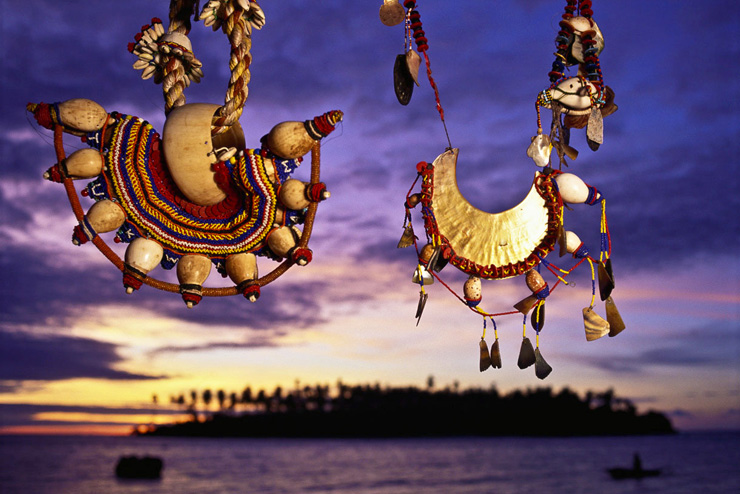
 
https://philosophyforchange.files.wordpress.com/2013/04/kula1.jpg
Hand-crafted jewellry from the Trobriand islands, similar to that used in the Kula ring written about by Malinowski.


How many words do they have for the dark?

When I studied a bit of social Anthropology at undergrad, I spent a couple of terms thinking about culture, cognition, and linguistics. This corner of a much larger course focused primarily on the difficulty of the Sapir-Whorf hypothesis or, more accessibly, the idea that a person's or a people's language changes the way they think about the world.

This is best illustrated by the old story that Inuits have about fifty words for snow or something like that. Everyone's heard that one, and the explanation is fairly reasonable. People are unsure generally whether this is a myth or not, but it seems like there is at least a grain of truth to it. Because Inuit cultures and languages developed in a cold place with lots of snow, they recognised that there were different kinds of snow and as such their language developed ways of describing them accordingly. It isn't so much that they have many different words for the same thing- I'm not simply talking about a kind of linguistic redundancy- more like they have intricate ways of describing subtle variations in a common phenomenon.
 
A more contemporary version of this might be the many, many different names we have for a nice cup of coffee. Americano, latte, cappuccino, long black, flat white, macchiato, espresso, filter, cortado, etc etc... You get the idea. The variety of language we have for different types of coffee helps us to appreciate the differences between them, and think about the topic in more depth. I'd like to point out my use of the word 'helps' here- we can still think about things without the language to facilitate it, albeit more nebulously. The vocabulary helps us to clarify our thoughts, but lack of language doesn't stop us being able to think something which we can't quite articulate. When I was working in cafes, I would get a little exasperated when people would come up to the counter and ask for "just a normal coffee." There's nothing ab-normal about all these different types of drink, the patron simply lacked the knowledge to discern between them, and regarded them all as a confusing mess. This isn't a condemnation, it's just a meeting of two different schema, two alternate maps of understanding.


To bring it back to the world of fantay, the thing which Dwarves unoubtedly spend their time immersed in is a dark enviroment. They could have dozens of ways to describe different kinds of darkness. Subtle variations in tone, perhaps even varying degrees of near-darkness and colour of light. Accompanying sounds, temperature, moisture level, percieved danger, emotional state of the perciever, smell- these could all contribute to a deep and rich vocabulary which comes from an a appreciation for all things unlit. Simply saying somewhere is "dark" when a Dwarf is in earshot might prompt bafflement or derision. Something like "What do you mean?" To which an uncultured human might reply, "You know, just normal dark. Like, when you can't see anything." The philistine.

Let's end things with a little imaginative delve into types of dark- a literal translation of the Dwarven word, followed by a slightly more detailed description.

Stone-pressing: This word describes the kind of dark where you know you are surrounded on all siddes by impenetrable walls of solid, metamorphic rock. Stones which have been still since the beginning of time, pressed and crushed into a form so strong and dense that nothing in existence can move them. There is no sound except your own breathing, the beating of your own heart, blood rushing through your ears. There is no movement of air, it is just closeness, stillness. A kind of peace. In the language of the Dwarves it sounds almost like the word for home.

Young-billow: The feeling of cold seeping into the ends of your toes and fingers, the tip of your nose. Cold, fresh air moving slowly through enormous space, but not being in the space itself. The air carries with it the feeling of immensity, and the darkness resonates with the orchestral echoes of frozen dust and cave clouds whispering as they wash over themselves. Many Dwarves say this darkness makes them feel invigorated, like a human might if they went walking on a crisp winter morning.

Rising-scalp-warmth: In the dark, when you can hear the dripping of a single water droplet, incessantly and unceasingly. Often when you are trying to sleep.

Beard-curl: When you can smell green things growing around you and the air is cool and wet with the breath of plants and mould and mushrooms. When there is soft earth beneath your feet and moss between your toes. You can almost see the stuff of the darkness itself swirling around you like a chilly soup. Tiny droplets of water spinning in a ballet.

Wall-mouthing: The feeling of hearing a living creature moving or talking far away. Distant echoes from uncertain directions. The sound reverberates through the darkness, and the direction feels fuzzy. This can be a comforting feeling, or a confusing and terrifying one.

Neck-cloth: In the silence when you hear a quiet shuffle of somethig moving nearby when you previously though there was nothing there. It is darkness enflamed with intense and sudden fear. A feeling which makes you want to dissipate into mist.

Far-shaping: When you are walking and in the distance you catch a glint of something- a glowing fungi, the shine of the water's surface, the sheen of precious metal, and your own movement allows you for a split second to see the full hugeness of the space you are moving in. A sense of visual depth or distance in a world where depth is otherwise defined by sound, touch, or smell.

Grey-rub: When you know that, however slowly, the rocks around you are moving. You can feel time pushing with immense weight and the rocks around you begin to feel almost like liquid. Perhaps you can hear them creak, crack, and groan as you sit in silence, or wander through deserted tunnels through the heart of the earth itself. Perhaps you can hear rivers of clear water flowing in forgotten places. It is a spiritual feeling. A connectedness.


I'm sure there are many more. I don't think my clumsy descriptions and literal translations have quite done justice to the subtle poetry that are Dwarven words for the dark.

Monday, 23 August 2021

Rime of the Frostmaiden: Cold-Hearted Killer Part 1

I made an old-school map for the game, inspired by those old classics like Baldur's Gate and Icewind Dale itself. If you look closely you'll see it's total crap, so don't look closely. If you want a high-res copy of the image, you can find it here.


 Over the past months, I've been thinking about how I might run Rime of the Frost Maiden. I bought a copy of TT Foundry, and it's pretty good. I'm not all that interested in the functionality of having the rules tied into the code of the platform, or in having it function as a kind of war game, but I like the potential to create an immersive atmosphere and combine images with music and whatnot all on the same screen. The software's ability to overlay weather (like snow), text, and dynamic lighting really make the maps seem alive, which I enjoy.

I'm also a massive fan of The Alexandrian, specifically the articles which go into great detail fixing the Descent into Avernus campaign. I read the official supplement and felt very underwhelmed by it, and I think Justin Alexander has done a great job bringing justice to what could be a great story, but which WotC left somewhat flat and riddled with inconsistencies. Elsewhere on his site, he talks at length about mystery adventures and node-based scenario design, and I thought I'd try my hand at adapting RotFM to just such a structure. By the way, if you have the time and want to delve into these Alexandrian.net links, I would definitely recommend it, they're great.

I also discovered ArtBreeder, and AI tool which allowed me to create NPC portraits and landscape backdrops with relative ease, some of which I've scattered through this article to give you an idea of what it can do. It's a lot of fun.

Lastly, I've been listening to Jeremy Soule's The Northerner Diaries, which fits perfectly.

Artbreeder uses AI to generate images of landscapes


Cold-Hearted Killer

and portraits too- this is Kaltro
Spoilers below. If you don't want to know the plot, read no further! If you're a compulsive self-spoiler like I am, read on.

Much like my reaction to Avernus, I was excited by the premise of RotFM but the initial quest seemed quite low effort. Hlin Trollbane walks up to the players and says 'here's a guy I want you to kill. I don't have any evidence to substantiate my request, but go and find him anyway.' That strikes me as pretty lazy. From the way I read it, this initial quest is supposed to draw players into the world of Ten Towns, encouraging them to visit the settlements in turn while searching for this man. However, it isn't very well structured, and there isn't anything more than 'is Sephek in this town? Roll a die and find out,' which could lead to a very frustrating sequence of walking from town to town without finding anything at all. There are other quests along they way, but if they don't make progress on this initial quest, by the time they find the guy they might not even remember or care why they were asked to find him in the first place.

So, how can we fix this? I would like to turn to The Alexandrian's explanation of node-based scenario design and try to flesh out this lacklustre quest. If you haven't read  the articles, or aren't already familiar with the idea, here it is. It's quite simple: At the start of the adventure, players are presented with a number of clues which point to certain people, places, events, activities, and so on. These form the nodes of the adventure, and each one holds a number of clues which point to other nodes. This structure works well for mystery-type quests where the ending is not known, and some thinking, investigation, and decision-making has to happen along the way. Gathering clues will lead players to investigate further nodes until they can solve the mystery and follow the quest to its conclusion. Nodes are arranged into tiers, which give players a sense of progression through a story. Eventually the tier one node clues stop showing up, new clues appear, and they are led further into the mystery.

(Lastly, I would like to quickly touch upon the idea of how much the players know at the start of the campaign. Yes, Icewind Dale has been plunged into a year-long Winter, but does anyone know why? Instead of just saying 'it was Auril, she did it and we need to stop her,' perhaps it would be more interesting if no one knew why. One night, the skies were filled with bright glowing auroras, rivers of light, and the sun hasn't risen since. People have been catastrophising and tearing their hair out over it, scouring books and digging up old knowledge to try and figure it out, but no one has a sure lead yet. I think that would lend a needed bit of mystery to the adventure. It would mean that the tidbits which the players uncover, even in this first quest, would set them on a path towards discovery and revelation, instead of a glorified manhunt. Or perhaps maidenhunt.)

For example:

Start- The players are in one of the Ten Towns. At this stage, it doesn't matter which one (except perhaps Targos, it would be helpful if they didn't start in Targos). It also doesn't matter when they arrived. Perhaps they just walked through the gates last night after a long trek and are facing the bleary, gloomy morning, or perhaps they have been staying there for some time already. They hear some gossip a body which was found outside in the snow not two days ago, frozen solid and apparently murdered, and the citizens are in no small amount of confusion over the whole matter. They can hear this in the market, in the tavern, perhaps a traveling scrimshander shakes their grizzled head and laments what Ten Towns has come to. The important part is that they learn three things:

A- Nobody knows who he was, but he was last seen alive in the local tavern a three nights ago.

B- The body, still frozen stiff, is being held in the undercroft of the town's church.

C- Hlin Trollbane, who arrived in town yesterday, is offering a 100 gold reward for bringing the killer to justice.

Now, these three clues give players three possible avenues to start investigating. They are concrete, actionable, and fairly conclusive. They could go to the tavern to ask questions about the victim at their last known whereabouts. They could go to the church to investigate the body itself. Or they could find Hlin to talk about that reward. Each subsequent node should give the players at least three clues leading to other nodes, so that as they accrue clues, the adventure builds up in a satisfying way. They feel like they are onto something. The clues found at each node should point both horizontally and vertically, so that the players feel a sense of progress, too.

The adventure looks like this so far

(A)- The Tavern

At the tavern, the players can learn that:

If the players talk to the barkeep, they learn that Hlin Trollbane (C), a retired bounty hunter, came by the inn asking questions about the 'murder.' She's been traveling around Ten Towns and got here yesterday. News travels quickly in Ten-Towns, and she came as fast as she could muster a sled. She took a room upstairs and gave the barkeep a job letter. The letter is offering 100 gold for anyone who can help solve the murders (yes, murders- that's plural).

The patrons can tell the players that the man was found frozen stiff outside a couple of days ago. Must have been out in the cold all night. They rushed The Body (B) to the church.

From talking further to the patrons, they can also learn that the man was in the tavern the night before he was found dead. He was acting very jovial and smug, boasting about how he outwitted the township of Targos (D) and escaped with his life.

Bonus Clues:

Perhaps with further questioning and a check or two, the players can learn even more clues. If they look deeply, they can learn a bit more about the man's situation, and that he spoke to several different people that night. The man was seen arriving in town with Torg's Merchant Caravan (E), a trading outfit led by a dwarf named Torrga Icevein, known as a shrewd and unscrupulous profiteer. People talk in Ten-Towns, and everyone knows a sliver or two of everyone else's business.

The man was also seen talking to a group of four strange-looking people. Out-of-towners who looked to be travelers of some sort. A man, an old woman, and a Halfling. They had a bodyguard with them too, who loomed silently by the table all evening. These are the members of the Arcane Brotherhood who have come to the Dale, and we will see that Dzaan's storyline diverges a little from the written version.


(B)- The Body

Brother Oswald

At the church, players learn that they're keeping the body in the undercroft until family can come to get him. That might take a long time, because currently no one there knows who he is. He's certainly not from around here, and that's all they can tell.

The clergy don't take kindly to gawpers, and unless the players have some kind of official mandate from the town's Speaker or perhaps the Reeve (if there is one), the will have to content themselves with talking to the cleric who stands watch over the undercroft for clues rather than seeing the body itself. The cleric in question, Brother Oswald (he isn't in the book, I just made him up) mumbles something about wanting to prevent hysteria spreading through the town. He also grumbles about Hlin Trollbane (C), who came by earlier being similarly nosy. He will reluctantly answer some of their questions, but chides them that if they simply want to gossip, they can go to The Tavern (A).

Brother Oswald can tell the players that Dannika Greysteel (F), a local scholar, busybody, and notorious tale-spinner, helped examine the body when it came in to the church. As a scholar, people often go to her with problems of a magical origin. She took some notes and went away to write a report on the matter, which she intends to submit to the town Speaker. She has a house of the edge of town where she does her work- namely, looking closely at the climate and weather of Icewind Dale.

Bonus Clues:

With some further prodding, perhaps a persuasion check or some kind of promise -- an assurance of good intent and a vow not to spread gossip -- Brother Oswald might let the players see the body itself. If they do get to see the body, they learn that the man is indeed frozen solid, even now. He was ostensibly killed by a stab wound to the heart, which lies open, frosted, and grisly. Brother Oswald tells them that the weapon was a Dagger of Pure Ice, which was embedded in the man's chest. Dannika (F) took it away with her to study. The man's eyes are a shade of blue like ice, cold and bright.


(C)- Hlin Trollbane

Hlin
Hlin Trollbane is a retired bounty hunter who came to Ten-Towns because the area is her family's home.
After traveling across Faerun, she wanted to return to her roots. Hlin Trollbane talks straightly to the players and lays out her offer to them. She has decided to take matters into her own hands in light of the reluctance or indifference of the Speakers of Ten-Towns to do anything about these crimes. She wants to employ them to solve what she thinks are a series of connected murders across the district.

She will tell the players that she thinks this murder is connected to two other which have happened in other towns over the past month or so. Her cousin, Alrik Trollbane (G) was found murdered in Bryn Shander last month, and a Halfling in Easthaven (H) was found a few weeks later. Hlin has been unable to gather hard evidence, but hearsay surrounding the murders concerns them being found frozen solid with an icy dagger plunged into their hearts.

She tells players it might be a good idea to look for leads in The Tavern (A)- that was where the victim was last seen. She also explains that she attempted to go and have a look at The Body (B) at the church, but the head cleric wouldn't let her in. She explains that the local Reeve in charge of the militia (if there is one in this town) will sometimes deputise people to carry out the law in Ten-Towns. The cleric would probably let them in if they had an official sanction.


After all that, we see that our quest structure looks a bit like this:


The players now have loads of options to choose from, and the clues draw them deeper and deeper into the world of Ten-Towns. The quest introduces new characters and they actually have a reason for speaking to them, rather than just being approached in the street. It feels a little more organic, and thanks to the structure, a little more player-led.

I think the best way to go from here is to reduce the amount of nodes in the next tier down. I would be inclined to have the clues point more and more in the same direction so that, wherever the players end up going, they are drawn to a similar conclusion. The evidence points to the answer.

So, for example, Targos (D), Alrik Trollbane (G), and Easthaven (H) would all give information about human sacrifice in Ten-Towns. They might also all point towards Torrga's Caravan (E) because it would have been in each town when the murders were committed.

I'm going to throw this post up for now, and I'll add another on the tier two clues soon, and how that feeds into tier three as the campaign progresses, as well as how the quest might get resolved.

Bye for now,

O


Sunday, 15 November 2020

A Grim Oasis

 "One would scarcely call Leviathan Bay a town in any reasonable sense of the word, so much as a squalid huddle of filth and misery built in the lee of a reeking mountain of bones and blubber."

    -Excerpt from the journal of Eliphas Quinn, renowned traveler and historian

    A town built beside the corpse of a beast so large it had no business ever being alive, so immense that its body is an ecosystem unto itself. It is a town where butchery is the main profession, blood and flesh the currency.

Monster fish taxidermy is my new favourite Instagram page
 
I'm not going to try a photo-bash a landscape of the place because I think it would look rubbish and it's better in my imagination anyway- as I hope it will be in yours after you read this article


    For some context, I recently read In the Heart of the Sea by Nathaniel Philbrick. It's a retelling of the historical account of the whaling ship Essex and its trouble with a particularly aggressive whale in 1820. When they were out in the Pacific, an enormous whale rammed the ship and sank it, leaving the crew of about 20 men totally stranded in their life boats. They had to navigate the ocean without a map, and many of them starved. Those few who managed to return were never the same, broken physically and mentally. It was the story which originally inspired the tale of obsession and vengeance Moby Dick, and it goes into immense detail about the context of the Nantucket whaling industry, as well as the physical and emotional toil of the job and the horrors of being stranded at sea for weeks on end. If you've ever wanted to read about the effects of severe starvation and dehydration on the human body, this book is for you. Philbrick also does a great job of describing how disgusting and visceral the job of hunting, killing, and rendering whales for oil actually is, with one passage describing the twenty-foot geyser of blood which happens when you pierce the arteries of a ten-ton whale with a spear. It's gross.


Would heartily recommend if you like books about whales or if you are a bit morbid (but not if you're into animal welfare, tbh).

This book inspired me too. China Mieville's weird fantasy is a favourite of mine.


   Anyway, back to the fantasy...

    The monster washed ashore during a titanic storm, one that will be remembered for generations. When the storm was calmed, the shoreline was flattened, quaint coastal towns and ports were erased from the face of the earth. Atop all the devastation, the felled trees, mounds of debris and banks of fetid mud, was a great heaving mountain of flesh. A malformed titan breathing its last. The squall left it stranded in the open air. It was accustomed to living at unimaginable depth and pressure. A deep dark where caustic horrors creep along the sea floor, along trenches and chasms beneath the waves. Above the surface, its body became swollen and formless, its muscles unable to shift its massive bulk. Its great mouth was studded with teeth like a dense forest of ghostly, branchless trees, festooned with kelp and strands of unidentifiable tissue. Its eyes strained and wept, squinting in the light.Where the sun cracked its oily skin, small creatures from the surface world began to sip at the rank effluvium that flowed out. Flies and maggots began to seethe in the muck. Ticks which had lived alongside it in the deep dark dotted its bulging flanks, hideous arthropods as big as cows, with their jagged maws buried in the creature's thick epidermis. Pores as big as potholes and brimming with foul lymph pocked its hide. A mountain of waxy, grisly purpure. Raw for all to see.

The surrounding land was forever changed. The dead leviathan nourished the earth with its body. In a short time, a profusion of life sprang up in the midden heap around the decaying behemoth. Plant life bloomed in the marshes and rock pools. Vivid fungi and lichens fed on the oil-soaked sand. A rainbow sheen came to rest on the water's surface, on puddles, as if everything were coated in a thin slick of oil. Creatures too - crustaceans and reptiles - grew large off this grim oasis. Giant arachnoid crabs which creep along the sea floor, through the effluence and rotten flesh that makes its way there, feeding on it, began to come up into the shallower waters each spring to spawn- a time of plentiful food but also danger for the inhabitants of the town.


Strange, ornate crabs like this, but bigger.


Big enough to contend with the beasts which stalk the swamps surrounding the mountain
  

It would be a nice place for a holiday if it wasn't for the... everything else


 In the wake of the storm, the region was wiped clean of people. A tabula rasa, free from the weight of history or the stain of industry which had encroached upon civilised lands. Entire settlements were swept away, claimed by the sea. The shoreline was flattened, remodeled, unrecognisable. A new wild. In the intervening years between then and now, people came creeping back, looking to settle again. This new and empty frontier of flat wetland was difficult to traverse, having no roads except twisting, unmapped waterways. A perfect place to escape the sclerotic gaze of the Silent City.

    The mountain formed by the creature's body was the region's only landmark, and people flocked to it as the stories spread. They came not only from the land but from the sea as well. Travellers and voyagers, escapees, merchants, and the morbidly curious came together by the shallow bay which formed on the leeward side of the leviathan's carcass. The place became a haven of sorts. An anchorage. People found that as the corpse nourished the life which surrounded the mountain, that life was a source of nourishment for them in turn. Not only for food, but for oil as well. Crews of whalers weary of the sea took to climbing the mountain in search of blubber. Other whalers in the region began to take their cargo to the town for processing and for sale. They would set up their catch on the shore of the bay, in the shadow of the mountain, and go about their bloody butchering, rendering whale blubber into precious oil.


Leviathan Bay

   If one were to actually travel to this place, despite having probably received a multitude of warnings not to, what might they find?

    Today, the first thing a traveller to the town of Leviathan Bay would notice is the smell. The musty, suffocating reek of putrid fish, burning oil, and the shit of ten-thousand seabirds is borne upon the wind and up the noses of any unfortunate enough to be within three miles of the place. From inland, the town is obscured by a ridge of hills which any visitor would notice to be somewhat incongruent with the flat, marshy plains to either side. These hills are flush with intensely coloured jungle and crowned with pale, angular protrusions. That this is the carcass of a vast sea creature might only become apparent once they come closer, once they see its skull.

    On the road to Leviathan Bay, one passes Skull Mount- the ragged, empty head of the beast which gives the town its name: millions of tons of bleached bone and sagging, ragged flesh baked hard by the tropical sun all towering over lush, lurid vegetation. Sea birds flock and swarm in the gaping hollows of its eyes, the ruined labyrinths of its nasal passages. A chalky crust of guano is accumulated at its top, like cliffs. It runs down the thing in streaks. Closer up, the sound is deafening. The birds' cries, shrill and raucous, fill the air.

Bass Rock in the Firth of Forth, near Edinburgh. Imagine this but with added skull and jungle.


I think this is a Right Whale, it looks suitably monolithic and mountain-like doesn't it?


    What can one say about the town itself? A town in such strange and exotic circumstances, this malignant paradise, ought be an equally bizarre and dangerous place. But for all the outlandish allure of its location, the town looks make-shift. Almost temporary, as if whoever set up didn't expect to be here for long. Little more than a tawdry pile of timbers nailed together. Old vessels have been upturned and made into dwellings, Ramshackle cabins are precariously perched on stilts. Lean-to huts balance upon larger buildings. Thick plumes of oily smoke drift skywards, a sign of the town's gruesome industry.

    For all the stink of the ocean, there is a human stink here too. A noisy, bustling place, Leviathan Bay is stuffed with people, with drinking dens, wet markets, bawdy houses, and dark alleys. Effluence and garbage make the boardwalks slippery, and oil lamps cast a dim, flickering light on proceedings.


 Butchers and Hunters

    The mountain, the body: that colossal heap of mottled, putrid blubber and bones serves the town's people as its primary source of income and fuel. Thus, butchery is the town's most lauded occupation. Crews of whalers grown weary of the sea and its cruelties stick to the shore. Known as flesh gangs, they vie fiercely with each other while wading knee-deep through gore for access to the most prime sections of blubber.

Their profession comes with no small amount of renown amongst the townspeople. They are armed with razor-sharp blades. Not mere fleshing knives, but huge implements- serrated greatswords, saws, cleavers, huge tongs, wicked machetes. They carry these openly, almost proudly even within the town. They look imposing and brutal, obviously used to labouring with great weight in the harsh sun.


The flesh gangs' tools would all be appropriately up-scaled, naturally.

The Golem Shop
The sign above the Golem Shop door

    According to the law of the dead, it is a heinous crime to interfere with a corpse. Desecration of the dead is akin to killing one's gods. An apostate mage, a renegade who seeks anonymity, has set up a shop here. Using the flesh and bone gleaned from the leviathan's carcass, the proprietor is able to create bespoke constructs animated by magic. They can ply their ghastly trade without the impending fear of the agents of the corpse lords coming to their door.
    The shop is known amongst certain circles for producing golems of a curious nature. Strange and misshapen, an attempt at the human form, but only an attempt. And one without a great deal of success, it must be said. The constructions are solid but they lack finesse, clumsy in their execution, almost childish. They are as if the maker is merely approximating human anatomy without knowing its inner workings.
    The thick, rubbery skin of the leviathan makes these golems more durable than the average flesh construct. Although, because the parts used to make them are essentially reconstituted, their overall integrity is probably lower than a golem made from parts which have grown together via more natural methods. They have small, sunken eyes. More like pinholes than functional organs. Their mouths are little more than an asymmetrical horizontal slit in their otherwise featureless nub of a head. Long, misshapen limbs teminate in a clumsy mass of digits. Yet there is brute strength in them. The flesh gangs sometimes requisition the help of one of these mute, brawny pinheads. A useful addition to any team which seeks to harvest yet more flesh from the mountain.


So Who's In Charge Here?

Who would the players go to in search of jobs? Is there a Mayor? You could put one in but I highly doubt it. Leviathan Bay is a free-for-all where no one tolerates being ruled. This is what the townsfolk came here to escape. Perhaps there is a charter of sorts which suggests how people shold go about their business, a buy-in which seeks to make the town a place where anyone can come and go as they please.

Other NPCs

Who else might be coming through Leviathan Bay with the players? Who calls this place home?

  • Sailors- The obvious choice. Sailors and seafarers come and go every day and night. They bring wares, cargo from all over the continent, the world, even. They smuggle, they drink, they fight. They wear odd clothes and sport strange tattoos and haircuts, tokens of their travels. Their skin comes in all colours. People from all walks of life, all clans, creeds, and cultures feel the call of the sea.
  •  Traders- A merchant can stand to make a good living off the oil rendered from the carcass of the leviathan, as well ass other whales which are hauled into the bay. These merchants broker deals and give a cut to the sorry, blood-soaked butchers who do the more gruesome work
  • Savage, gibbering, and insane
    Hunters- The townspeople also rely on other creatures on the mountain. They eat the birds which mass on the its sheer slopes. They hunt them for sustenance and eat their eggs, collect their guano which accumulates in lithic formations below their nests. Armed with nets and spears, the town's hunters also seek crabs, alligators, and other meats for selling at Leviathan Bay's wet markets and roadside meat traders.
  • Hirelings- It would come as no surprise that there are some people in Leviathan Bay who have no wish to stay there a moment longer. A person desperate enough might seek to sell their services for passage aboard a ship, or a caravan through the swamps in hopes they might find a better life elsewhere. However unlikely this better life may be, perhaps they are simply yearning to go somewhere which smells a little less foul.
  • Eaters of the Dead- Those poor, desperate souls who succumb to the disease of the ghoul exist on the fringes of every society. They scrabble and claw at the periphery of society, looking for scraps, their feral eyes watching from the dark. Wracked with an insatiable hunger, they lose the ability to think rationally and are driven by this primal urge.
  • Probably nothing so obvious.
    Agents of the Unquiet- The dead do not rest in this world. They dream and they hunger. Their spies are everywhere, those amongst the living who have pledged their life so that they may rest decadently in death. The Corpse Lords despise those who do not fall under their dominion. Those who are living and free are anathema to the law of the dead. What's more, people come to these lands to escape persecution. No dark abbey rests atop a hill. No watching gibbet or tower looms over the town. Not yet, anyway.
  • The cult of the Fire- Adherents to an ancient faith, this cult strives to overthrow the Kyriarchy of the Corpse Lords. The believe in the cleansing, changing power of fire, and they seek to bring that might to bear against their calcified overlords. Rumour has it that a number of ships carrying barrels of gunpowder and weapons have been seen coming and going in the town of late. They are using the town as a base to smuggle supplies into the country for their ongoing efforts.


This thing. Isn't it gross?


But also incredible?

That's about it for now. I hope to write some more on this world later. As you might have gathered from some of the descriptions and allusions to the Silent City, the Unquiet, the Corpse Lords and such, there is a bunch more to this setting I have yet to commit to type. It's all in various notebooks I have strewn around the place. I'll be making an effort to collate it all here when I have the time.

I've been taking inspiration from the writings of James C. Scott when developing this world. Namely Weapons of the Weak and The art of Not Being Governed: An Anarchist History of Upland Southeast Asia.

Peace,

O


Friday, 19 May 2017

Memento Mori: Approaches to Necromancy


I've been thinking and reading and watching things recently regarding various aspects of necromancy in RPGs. Specifically there seems to be a lot of debate as to whether it's a good thing having necromancers as PCs and whether or not necromancy constitutes an inherently immoral thing etc etc. You know, the usual stuff. I don't know if it's specifically my own inclination for morbid fascination with bones and skulls, or whether it's something that most people find, if not interesting as such in a way that makes it an enjoyable subject, at least intriguing, at least something which pulls at their imagination, at least something grimly alluring, but the idea of Necromancy is interesting. Let's say that, at least. Interesting.

By 'interesting' I think I mean 'has held an enduring fascination for thinkers and artists since the conception of mortality'.


What's also interesting perhaps is an examination of possible reasons why it is often looked upon as morally reprehensible. So many times I've been reading about this and I come across the same kind of argument. It's the idea that necromancy, as a force is amoral and thus separate from its actual use and application. If someone uses it in an immoral way, then it is immoral, and presumably the converse is also true. If someone uses necromancy in a moral way, or avoids using it in an immoral way, they are fine (if still a little bit kind of creeeeepy or just morbid).

But in regular D&D, a necromancer has very little choice but to use it in these supposedly immoral ways. The only choices they have when it comes to using the most effective and powerful spells is to raise and bind the dead, to leech the breath and life from the living and twist it, to wrench it away and use it for whatever their own purpose may be. To kill. The general kind of thinking, I would imagine, goes along the lines of 'what's the point of being a necromancer if you don't want hordes of undead followers to do your foul bidding? The minions are what it's all about!' See my previous post regarding effectiveness and its incompatibility with roleplaying.

But what if there actually was a real choice? A choice that profoundly affected the way a necromancer approached their interactions with the living as well as the deceased.

In my previous post, I speculated upon how the structure of the universe is very important when dealing with things like magic, the dead, and interactions therewith. So to begin with we have the kind of necromancer bent upon indentured servitude through binding the deceased, or the bodies thereof. The issue of whether this constitutes actual slavery depends upon the sentience of the dead when they are bound, but I think it is far more interesting to suggest that there really are souls or perhaps consciousnesses involved in there somewhere, otherwise it would be too similar to simply animating any kind of inanimate object. No, the significance of raising the dead is that it is far easier when one uses a spirit that used to be alive. Instead of going through the rigmarole of animating say a statue, with all the complexity of giving a kind of effective artificial intelligence (which, as we know, is much easier said than done), one can dip into the ether and hunt for an erstwhile living, breathing thing that knows how to think, knows how to inhabit a body.

I suppose a neat parallel I could draw would be the relationship between mages, demons, and the fade in the Dragon Age series. The power of mages comes from the fade, and the demons therein are often bargained with or contracted to servitude with varying degrees of success by mortal mages. This relationship hinges upon slavery and maintaining a tight control over the spirits in order for them to be used and manipulated as the mage wants. However, this does not really speak of an actual relationship between sentient creatures, only one of pragmatism and efficiency. The main alternative to this, I feel, is presented in Inquisition where Solas (we'll ignore any plot related points on how Solas is .. well, I don't want to give away any spoilers for those who haven't played) and his interactions with the spirits of the fade, which are far more mutual, more along the lines of sentient creatures' understanding each other and, although they are of different kind, different nature, they act towards each other with respect. The taboos regarding interactions with demons and the dangers of possession etc etc are disregarded by him because he understands their motivations and has an empathetic kind of relationship with them. He sticks largely to his world, they stick largely to theirs, but there is a meaningful relationship formed between the two. I suppose it is this which I am trying to suggest can be reflected in the workings of the necromancer.

The key theme we see emerging here is one of imposition. The projection of one's will onto another without their consent leads to the subtraction of agency from the dominated party. When a prospective necromancer binds dead spirits or bodies to his or her service, they are stripping this erstwhile person of their free will, taking away what makes/made them human. This works whether or not one chooses to include the existence of souls in their RPGs. A human's body, whether they are dead or not, if often thought to still essentially be subject to the right of bodily integrity, hence the taboo regarding grave robbing and the sanctity of the corpse. Whether you ascribe active agency or not to a person's dead body and/or soul results in the same issues when one attempts to interfere with them.

This feels like a complex issue, but the crux that I am getting at is that there appears to be two opposing approaches to interaction with the dead.

Two different strands of Necromancy. Neither one inherently good or bad. I think we can do away with the notion of inherent good and evil and instead look at these approaches as able to justify themselves in their own ways. Because each one considers the other to be foolish and/or dangerous is simply a product of their differing philosophies.

One seeks to reach an equilibrium with the other side of life, to put to rest any misgivings or misinterpretations about what it means to pass over, to join the choir invisible, or otherwise shuffle off this mortal coil. If one were to D&D-ify this approach, a place to start might be the dubious profession of the medium. One who channels the spirits of the dead in an empathetic and mutual way, seeking to communicate and to understand rather than to dominate. Perhaps this approach seeks the dissolution of the barriers that separate life and death. How can one die in the traditional sense if the boundaries are so blurred? Perhaps this path is about seeking a way to live forever, or to radically change the structure of the world so that death no longer means such and abrupt and definite end to life.

The other is about control and harnessing the potential of the well of souls to which we all go when we die. There's a lot of gravity in that well. It is heavy with the weight of the dead. It's about tapping the power of the billions of souls that have lived and died, for the benefit of those that live. Its about preserving the order of the world. Embracing the ephemeral nature of life and holding the structure of the universe bound in an iron grip to keep it turning, keep it working as it should. The fabric of life and death are such that each cannot exist without the other. If death is rendered meaningless, if the wold is tampered with on such a fundamental level, it is impossible to determine whether life can still exist.

I think I shall compile some more ideas and create some non-competitive D&D classes based around these ideas. Thanks for reading, if indeed you did.

Monday, 20 March 2017

Non-competitive classes

Balance. I'm not a huge fan.

It's been sort of narking me recently that all D&D classes seem to be for is making characters as good as each other. They aren't there to make a character into an interesting or nuanced person as much as they are to make the character relevant in combat. Classes make characters excel at something, make it so that they have a niche and their skills are combat-useful.

Case in Point

When a wizard runs out of spells things get very undignified
Take wizards for example- a staple of D&D, practically the sine qua non of fantasy games. There's always a wizard in there somewhere. In D&D, wizards rely on their spells to be effective, and this is partly where the problem lies. I fully anticipate that this might sound like an absolutely ridiculous statement but I make it because in D&D, mechanically speaking, other than cast spells wizards are good for nothing. When they run out they're basically a peasant with a stick and a large vocabulary.

In order for there to be some kind of balance within the game, class wise, fighters should be balanced with wizards when it comes to efficacy within combat. Combat is the crucible in which all the classes are tried and tested for that thing called balance. But I don't like that. When aiming for a fantasy that is somewhat interesting, balance is something to be avoided like the plague. A person who has trained every day of their life with a sword should be able to come up against someone who has never swung anything sharper than a spoon in all their days and instead spent their waking hours engrossed in books, and completely wipe the floor with them.

The idea is that all classes should be roughly equatable in combat for the sake of balance, right? Alright, maybe not quite... I suppose it's more that each has a kind of niche within the fight- each has a combat role, be it healing, defense, damage, stealth, or what have you. But my point is that none of the classes are objectively not useful when it comes to combat.

I do understand this. D&D is a team-focused game that relies upon people working together, especially in combat. But I would find it odd that someone would devote their lives to reading and delving into the secrets of the universe just so that they could pop a spell at some goblins or bandits or whatever. Yet a wizard in combat is regarded as a somewhat poor show if they haven't memorised a fireball or two and can't keep up with the fighter in terms of damage output.

The key term here is efficacy. The default model is efficacy measured on a numeric scale. But what I'm aiming for is wizards, in fact all spellcasters, that are less powerful in terms of immediate effect. In my opinion, what these classes do within a story is function as the catalyst for inserting magic, for making the adventure magical in the first place.

What makes a wizard an interesting class to me is the concept of their power possibly being measured on a narrative scale. One that is relevant to the storytelling within a game. Their ability to know things and to go places that other's wouldn't otherwise is the interesting part. Their power to apprehend forces beyond the scope of the untrained, their capacity to pull snippets of forbidden lore from dark parts of the universe and follow the trail of occult evidence back to its source. To really delve into the unknown and mysterious facets of the world.

The adventure only truly begins when things take a step away from what is normal. A spellcaster's ability to see elements of the magical in the mundane is what I'm trying to get at here. Having magic and wizards and whatnot lends an element of unexpected and spontaneous significance to what is otherwise commonplace. It makes people re-examine the normal, because what is going on under the surface could be something entirely and staggeringly not normal.

I'm going to work on a list that involves non-competitive classes. Ones that can't even be compared to each other numerically because their domains are so utterly different. It would almost make it so that players in the same group were manipulating the game via vastly different mechanics that only their characters could influence, each representative of how the character perceives the world. At this point nothing is off the table, except that you can take your lightning bolts and your magic missiles and put them ... put them somewhere else. I've got a bunch of other stuff to think about. Hummm...

Sunday, 1 January 2017

A Case for the Axiomatic Universe

I am a believer that, in order to be consistently surprising and interesting, a setting needs rules. It needs rules not necessarily like 'rules for combat' or 'rules for spellcasting'. Those are game rules, not setting rules. A setting needs rules that are more like immutable axioms. Laws. Ones that can be used and interacted with and that have consequences for transgression or attempts thereat. General laws that function like mathematical axioms (although it's fine if you're fairly sparse with the numbers. I'm certainly not going to spout any algebra) can help to bring a kind of reliability and structure to a more free-form campaign, or spark inspiration for a deep and involved storyline and meaningful character motivations and revelations.

Amidst the intricacies of world building, there comes a point where you have to grapple with the cosmology of the world. A point where you have to consider what actually happens to a person when they die, and why. Whether it is a simple as going to sleep forever and being subsumed by the soil, or whether it is more complicated than that, is open to different interpretations. This is not a description of the beliefs of people or their convictions or belief in any specific eschatology, but a literal account of the metaphysical (or purely physical) structure of the universe itself, including how living creatures figure into that construction.

For example, a child out for a walk with a parent (I may be recalling from life here) might see a dead bird and make some kind of comment about it, maybe ask what the bird is doing, whether it's okay, and the kid might be a bit sad because I think on a fundamental level, all children understand death in a way, unmolded by growing up. The parent might try and explain death, saying it is dead and leave it at that, or they might try to assuage the child's sadness by suggesting that its spirit is in heaven and is generally having an okay time despite its crumpled body being face down in a puddle (or indeed, that seemingly popular thing that adults say to children, 'bird heaven'. A kind of vanilla version of the Christian argument that only humans really have souls and nothing else is destined for the kingdom of eternal bliss and happiness). Does this then mean that every species on the planet has a specific heaven that they go to? Does this extend to plants? What happens when it gets all crowded? Where actually is it- is it up in the sky? Can I see it? All those innocent and practical things a child might think when first confronted with the idea of 'heaven' have an amusingly apt and appropriate place in fictional world-building.

Anyway, I digress. There are a few key questions that need to be answered in order to address the issue with the hope of coming to any meaningful conclusion. And these questions, although contentions is reality, are so easy to think about in a fictional context. Things that are tragic and immutable in the real world can function differently in fiction. They can be powerfully symbolic and catalysts for profound interpretations of our own lives. That is, after all, I feel what roleplay is for. Getting inside something or someone else in order to allow for reflection on one's own actions and life. These things can be crafted and informed by intent and the desire to convey a particular feeling, metaphor, or, you know, just because they allow for some cool stuff like magic and demons and undead and so on.

A prime example of belief informing practice- Allegedly, The Greeks and Romans were sent on their passage with gold placed upon or in their mouth to pay the ferryman to the afterlife- no one wants to be caught short in that kind of situation.

Some necessary questions (necessary for myself, anyway- take from them what you will, dear reader):

1) What is real?

Detailed in reams and reams of religious doctrine are accounts of the reality of souls, how we are animated by a divine spark or a kind of spirit, energy, identity, or consciousness separate (or not separate) from our material bodies which endures in some way after that body ceases to live in a way that is more than just memory. Scores of different belief systems around the world ascribe to the persistence of a person after they die, in some way or another. They attest to there being something more to being alive than just being able to think. Something that cannot be immediately apprehended and can be accessed through spiritual or otherwise non-physical means.

If the answer is, in actual physical real terms, anything like a 'no', then the sole existence of life after death relies upon human belief and cultural tradition. There is no reality after death that we can definitely verify, there is no afterlife except what people imagine in their minds, and people persist in no other way than the memories of the deceased that reside with the living. This system is not unlike the one we find ourselves in here on earth (that is of course if one isn't particularly religious or spiritual but let's not get into talking about things that are real. It's just D&D here, you understand).

If, however, due to the luxury of fantasy and fiction, we can imagine the answer to this question resembles a rather more concrete form of 'yes', the second question must be addressed.

2) If souls are real, what are they?
This question is not really quite as straightforward as the last one. In fact it's a bit misleading because it could more accurately be described as lots of smaller questions that can or cannot be answered definitively all masquerading as one larger question that is full of holes and confusion...
These questions might be something like-

- Is the living creature's consciousness directly tied to the soul and does it persist with the soul after death?
- Following from that, does the soul have any kind of agency or is it simply an impartial piece of matter or energy, pulled around by the universe to whatever end?
- Do souls have any kind of physical reality or is it impossible to interact with on a physical level? I.e. can a living person actually see or otherwise apprehend it and likewise can it do anything to interact with the physical world?
- If they can exist without bodies, are there souls that have always existed without bodies? Like angels, devils, what have you.
- Where do souls come from? Are they eternal? Without beginning or end? Are they created or do they come into being when something is born? Do they cease to exist as an individual entity at any point?
You can of course kind of riff of anything here until you get to a point you like, or until you feel you've gone far enough to cope with anything that might crop up during the course of play (of course, this is no guarantee, no matter how much you plan).
All these can of course lead into many larger questions about the nature of the universe, its structure, processes of change, its beginning and end.


3) Is the world multidimensional?

In basic terms, this is asking 'does heaven exist?'. Are there any places in the world that cannot be directly seen or interacted with by people living in the material world except by means of magic or symbolic ritual or something, and what are they? There are again many questions one can imagine when trying to puzzle out the nature of these extra-dimensional places. Such as-

-Do they have an inherent nature or meaning or are they just 'other' kind of places?
-How did they get there? Did they exist since the beginning of the universe, if indeed there was such a thing, or did some fluke or the universal mechanics cause them to be, or did some will create them?
-Do they overlap with they world in which humans live or are the two places completely separate? For example, in D&D cosmology the plane of shadow or the ethereal plane could be said to 'overlap' whereas outer planes like the abyss are, although in certain ways connected to the material plane, more or less separately located.
-Do they provide a kind of function to the universe? Like organs within a body, are they necessary to keep the structure of the universe ticking over or are they inherently meaningless? For example, Purgatory serves a purpose in that is a place that souls go if they were kind of okay but not great, or Jewish, or Pagan, or something else deemed by ye olde Catholics to be 'not really cool'.
-What are the contents of a given alternate dimension? Does it look like an alternate version or our world or is it something entirely different?
-Are there a finite number of extra dimensions?
-Are they easily accessed (and if so, how) or are they completely hidden?
Again, like, go mad with the ideas until you feel like you're at an acceptable level of cool, or weird, or intricate, or profound. I don't have to tell you, I'm sure.
This question then feeds directly into the last question

4) As a result of interaction between the answers to questions 2 & 3, what generally happens when someone or something dies, and what can happen?
Once all the things in the world pertaining to the cosmology are in place, I find it becomes quite interesting to think about what might happen to a soul after it leaves the body, or perhaps doesn't leave the body. I dunno. This then helps you answer things like-

Can the dead come back to life?
Did they ever even leave?
Does the experience of death stay with one as a concrete memory that carries on into the afterlife, or are all memories and impressions of individual personality erased upon death?
Can one influence or communicate with the dead in any meaningful way? If so, how?
How do the living interact with souls that are devoid of body (whether dead, having left the body, or other-dimensional, having never had one in the first place)?

This section of questioning is interesting in that it opens the way for some really interesting interactions and ideas, but that it also potentially suggests that no matter the structure of the universe, there are some things that are just not possible (but then that just incites a greater challenge in the minds of players upon discovery, no doubt allowing for even more story potential and DM contortion).


Conclusion


Either way, by using the framework you have previously conceived of, you can create logically consistent and interesting interactions that follow the rules that you have set down. Even better, it allows the players to do the same. If the bones of the world are eventually laid bare (in a story-appropriate kind of way, naturally) and the players see that all is not subject only to the fickle will of their DM, a fallible human, but that in many ways the DM is subject to those rules as well, it can act as an empowering experience that helps players feel invested in their story and their character.


Contrary to precluding cultural beliefs and faiths, questions like these can be used as a starting point for imagining ways in which people interpret what they can see of these processes into their own belief and faith systems. Religions and cultural practices can be informed by these things and the ways in which they impact upon the lives of people in the setting. If souls are real, and there are multiple dimensions to the world, and there is significant and meaningful interaction between all of these things, they can perhaps manifest as spirits, demons, angels, inexplicable beings, ghosts, travel to the afterlife (and back?) and they can be present in people's mythology not just as metaphor or folklore, but as tangible things about which to learn, about to wonder, about which to be afraid, and about which to whisper prayers in the dead of night. It all goes together to form a kind of mindset which people in the world have, and upon which they base their actions, beliefs, and knowledge (epistemology- sorry, I said it again).

All these questions of course do not need to be made and answered explicitly to players in a D&D campaign (in fact it is more interesting and exciting for them to figure these things out by themselves as long as, of course, these rules they discover remain the same- enough so they know what to expect next time) but, in my opinion, it really helps a DM to have a fair idea of what happens in definite terms in their cosmology when the players do things like kill stuff, get killed, travel to different planes, mess with magic and the fabric of reality. Converse to limiting player's decisions, I feel it actually allows them to interact with the campaign world in a more meaningful way. If they come to understand the structure of the world they play in, they can inhabit it and use it, they can manipulate it, protect it, destroy it, whatever really.

In any case, the jury is out when it comes to the metaphysical structure of fictional worlds, and you can have as much fun as your imagination can cope with. The key point I'm making here is that laws like this help DMs and players to create consistently interesting worlds and meaningful experiences with logically consistent cause and effect relationships that actually matter. Good things, in my opinion.